





No ‘ghosts’, only grit: The truth behind the TIKAS Program


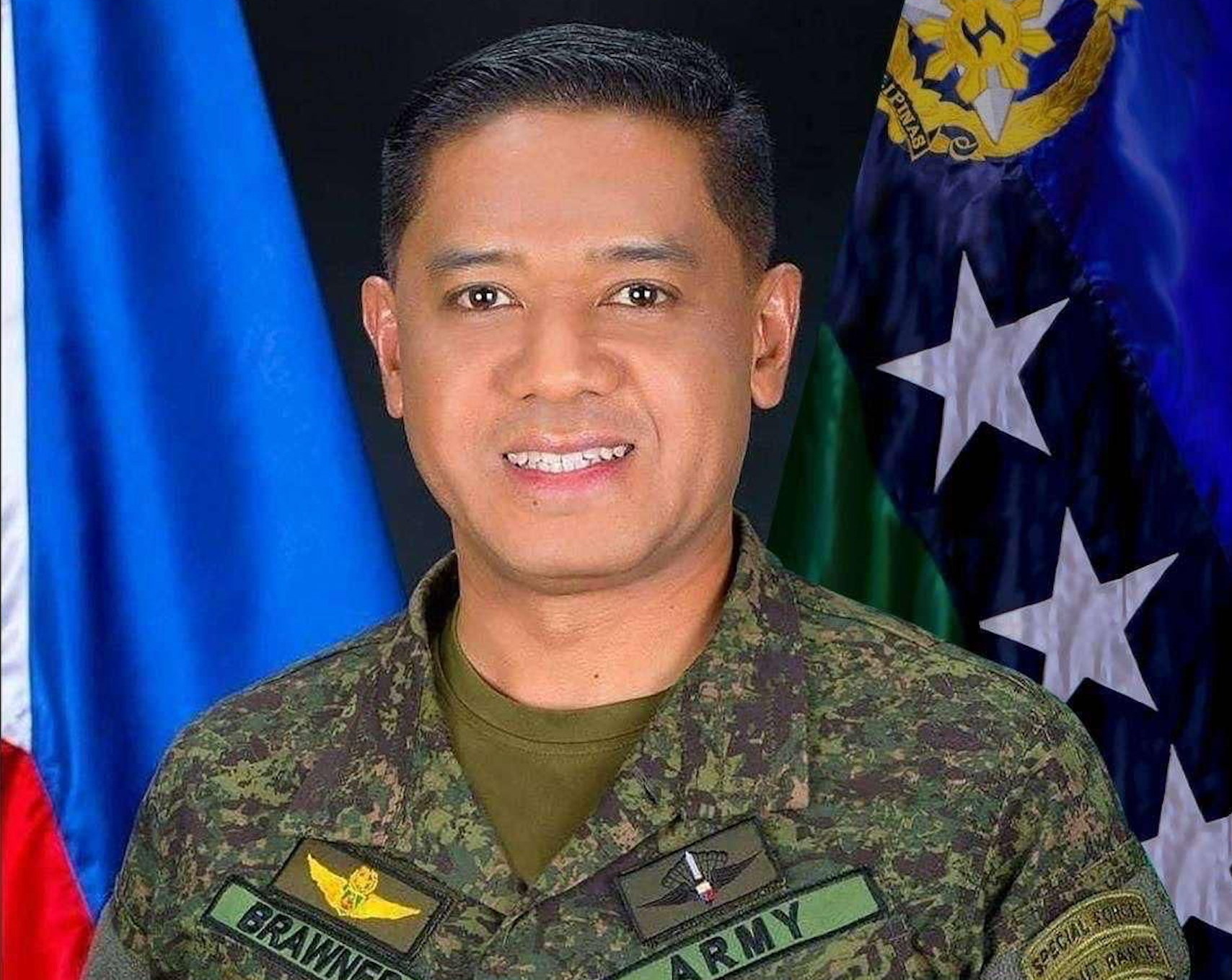
Recently, malicious allegations have circulated online claiming the existence of so-called “₱15-billion military ghost projects” from 2023 to 2025. These accusations are not only baseless — they are deliberate lies, carefully crafted to discredit the Armed Forces of the Philippines (AFP) and malign the integrity of its leadership.
Let me state unequivocally that under my watch, there are no ghost projects in the AFP. Every resource is accounted for, every structure is real, and every project directly benefits the Filipino people.
The dedicated men and women of the Armed Forces serve this nation with honor, and we will not stand idle while our institution is attacked by falsehoods. That is why we take strong exception to anyone who suggests otherwise. Those who maliciously and irresponsibly spread such disinformation not only undermine public trust in our soldiers — they also weaken the institutions that defend our democracy. As such, we will not hesitate to take legal action against individuals or groups who deliberately disseminate false and defamatory claims about the military and its leadership. Accountability must apply not only to public service but also to public discourse.

To understand how TIKAS works is to see why the term “ghost project” is completely misplaced. TIKAS, which translates to Tatag ng Imprastraktura para sa Kapayapaan at Seguridad, is a partnership between the Department of Public Works and Highways (DPWH) and the Department of National Defense (DND), designed to build and rehabilitate military facilities across the country. It forms part of the national infrastructure program under the General Appropriations Act (GAA) and is lodged under the budget of the implementing agency — the DPWH. This means the AFP does not directly receive, obligate, or disburse any TIKAS funds.
Further, the AFP does not, in any way, demand, solicit, or receive kickbacks, commissions, or so-called “SOPs” from any TIKAS project. Our role begins and ends with ensuring that these facilities truly serve their intended purpose — the welfare and operational readiness of our troops. In fact, a DPWH engineer once remarked that they prefer implementing projects for the AFP precisely because the military neither asks for nor tolerates any form of payback or under-the-table arrangement. Integrity, after all, is not a slogan in the Armed Forces — it is our standard.
From 2019 to 2025, the TIKAS Program has covered 927 approved projects across all branches of the AFP — the Philippine Army, Philippine Air Force, Philippine Navy, and the Unified Commands. As of this year, 663 projects have been completed, 139 are ongoing, and 136 are set to begin. Only a few projects have been suspended or terminated due to technical, environmental, or contractual issues. These figures are well within the normal range for a nationwide infrastructure program of this scale.
These numbers are not conjecture. They are recorded, reported, and verifiable. They reflect progress, not deception — diligence, not disorder.
While the DPWH remains the implementing agency, the AFP faces constraints in verifying project progress and fund utilization because we have no direct administrative access to implementation data or financial documents. This gap in visibility is precisely why I support the proposal to transfer the TIKAS budget allocation and execution to the AFP — so that accountability, efficiency, and end-user oversight can be strengthened where they matter most.
My agreement to the proposal is rooted purely in efficiency and accountability. As the primary beneficiary and end-user, the AFP is best positioned to ensure that projects meet operational needs, quality standards, and timelines. When soldiers build the future of their camps and communities, every peso and pillar will count.
When I served as Commander of the 4th Infantry Division (4ID) in Cagayan de Oro, I personally witnessed how TIKAS projects can succeed — and where improvements are necessary.
One of our major TIKAS initiatives was the construction of the new 4ID headquarters building, which was successfully completed and now stands as a symbol of what proper coordination and oversight can achieve. Another project was the ₱120-million extension of the 4ID hospital, intended to serve our soldiers and their families.
During our final meeting with the DPWH, they proposed splitting the project into two phases — ₱120 million for the first phase and an additional ₱59 million for the second phase the following year. I disagreed. The total project cost approved was ₱120 million, and that amount should have been sufficient to complete the hospital as planned. I also raised a practical concern: there was no guarantee that funds for the supposed second phase would be available the next year.
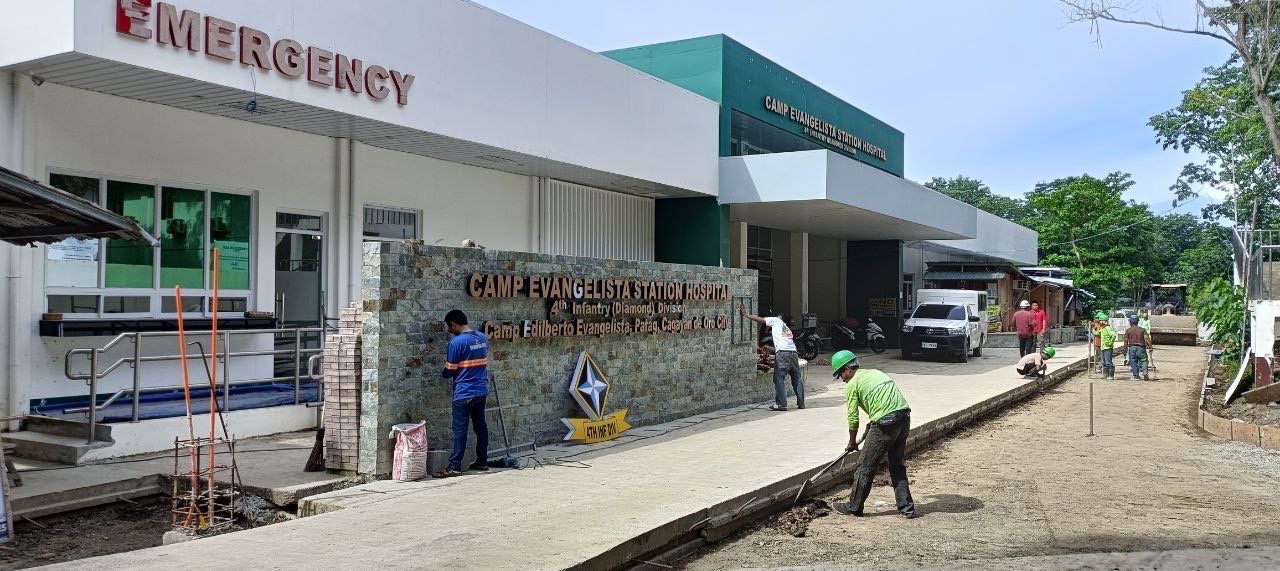
I insisted that the hospital extension be completed within the approved ₱120 million — and it is now seeing its final completion.
This experience reinforces my conviction that when the AFP is given direct responsibility for its infrastructure programs, we can guarantee that projects are not only completed but done with the same discipline, foresight, and integrity that define our service.
The TIKAS Program is not perfect, but it represents a step in the right direction — a tangible investment in the readiness, welfare, and morale of our troops. From classrooms in remote camps to hospitals for our wounded warriors, these projects give concrete form to the government’s commitment to national defense and peacebuilding.
As we continue to gather updates on project statuses — whether completed, ongoing, unfinished, or abandoned — we will make this information publicly available. Transparency is the foundation of trust. The Filipino people deserve to know where their money goes and how it contributes to their security and development.
In this regard, we also urge our partners in the DPWH to exert all efforts to complete the remaining TIKAS projects at the soonest possible time. These facilities are vital lifelines that sustain our soldiers’ welfare and operational readiness.
To our critics, and to those who seek to undermine the institutions that safeguard our Republic, I say this: we will meet falsehood with facts, and malice with moral courage. The AFP will continue to uphold transparency, advance through reform, and lead by example.
Accountability has never been the weakness of the AFP. In fact, it is one of our greatest strengths. In every mission we undertake, in every structure we erect, and in every life we protect, we prove that our loyalty is not to comfort but to country. Our foundations are not made of stone alone, but of honor, discipline, and faith. Long after the dust of construction settles, what endures is the fortress of trust we build with the Filipino people — a stronghold no rumor can breach.
We do not hide behind walls; we raise them with transparency and purpose. In doing so, we strengthen not only our camps but the very trust that binds the military and the nation as one.
The true measure of our defense lies not only in our capacity to build, save lives, or fight, but also in our steadfast commitment to stand for what is right — even when no one is watching. That is the spirit of the Armed Forces of the Philippines. That is the TIKAS we build — not only in concrete, but in character.
The AFP stands ready to defend the truth, the institution, and the nation itself — because integrity, like freedom, is not simply declared; it is defended, day after day, with courage and conviction.
That is the General Idea.


