





The roadmaps that built today’s professional AFP


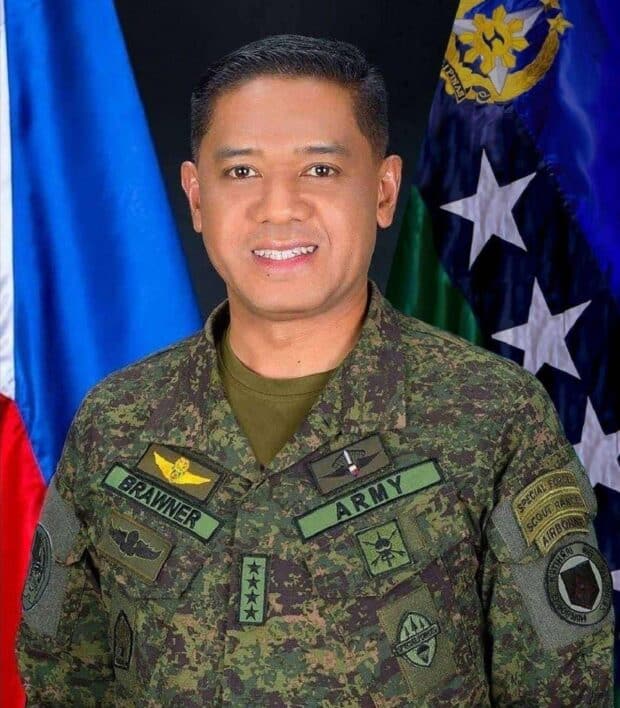
Last week’s discussion was about discipline in the face of turmoil—how the Armed Forces of the Philippines (AFP) stayed calm, constitutional, and united during a pivotal weekend for our nation. Across the country, thousands of Filipinos took to the streets to call for systemic reforms. Amid the noise and passion, one thing remained certain: the AFP stayed impartial, anchored to its duty to protect the people and defend the Republic, unswayed by politics, and faithful to its mandate.
As we stood our ground, this naturally raised the question: how did we get here? How did the AFP, once vulnerable to political currents, evolve into a professional force that commands the people’s trust and remains steadfast in its constitutional role?
The short answer is that we grew up with a plan—and we stuck to it. Fifteen years ago, the AFP committed to a long transformation. We adopted a governance framework that pushed us to set clear goals, measure ourselves relentlessly, publish our progress, and make leaders—down to unit commanders—accountable for results. This effort came to be known as the AFP Transformation Roadmap (AFPTR), later aligned with the country’s long-term vision, AmBisyon Natin 2040. In practical terms, it meant linking our strategy to budgets, training, promotions, audits, and even the way we report to citizens.
I say this not as a distant observer but as someone who helped draft the AFPTR as a younger officer. I remember the debates on what “world-class” meant for a Filipino soldier. How do we balance internal security with external defense? What should we measure—only battle scores, or also integrity, logistics, human rights, and disaster response? Those early arguments produced a truth that guides us to this day: professional arms require professional systems.
To make the roadmap real, each major service built its own 20-year plan. The Philippine Army (PA) launched the Army Transformation Roadmap and used scorecards to translate strategy into daily work—unit by unit, office by office. Years before “scorecards” became common in government, the Army was already publishing a Performance Report that broke goals into measurable targets. These reports showed how brigade and battalion objectives laddered up to the Army’s mission. This proved that transformation was happening on the ground, not just in presentations.
The Philippine Navy (PN) rolled out the Strategic Sail Plan, a long-range blueprint to rebuild a “modern, multi-capable navy” in stages. The Sail Plan set milestones not only for ships, but also for people, processes, doctrine, and culture—elements essential for safe and credible naval operations. The plan has since been extended in horizon to align with 2040.
The Philippine Air Force (PAF) implemented the Flight Plan, which matured into Flight Plan 2040. If you want to see transformation expressed in plain language, read the Air Force’s own materials: they map strategy to office, unit, and individual scorecards—so a young airman can see how today’s task connects to the PAF’s long-term goals. That is what institutional maturity looks like: from vision, to measures, to habits.
All of these plans—Army, Navy, and Air Force—sat under one discipline: the Performance Governance System (PGS), stewarded nationwide by the Institute for Solidarity in Asia. The PGS required institutions to graduate through levels (Initiated, Compliant, Proficient, Institutionalized) only after external validation. The point wasn’t to chase a plaque; it was to internalize governance so deeply that it survives changes of command. That mindset helped the AFP and its services reach the “institutionalized” culture citizens now recognize.
While soldiers in uniform carried out reforms within the ranks, equally vital was the participation of those outside it. This is where the Multi-Sector Governance Council (MSGC) at the AFP level and the Multi-Sector Advisory Boards (MSABs) within the major services come in. These councils—composed of leaders from civil society, academe, business, faith-based groups, and other stakeholders—serve as the transparency and governance partners of the Armed Forces. They give life to the PGS by providing an external check. They hold us accountable to the public we serve, ensuring that reforms reach not only paper but practice.
From procurement to training, from governance systems to community programs, the AFP’s steady progress has been shaped by this partnership. Our transformation is not only a story of internal discipline, but also of opening our doors to scrutiny and guidance.
Why does any of this matter to a family in a flooded barangay, or to a fisherfolk working in the West Philippine Sea?
Because good governance is combat power. Clean books mean resources go to radios that work, fuel that arrives, and relief goods that reach people on time. Clear scoreboards mean units know their targets and leaders can fix what isn’t working. Transparent audits shut the door on waste and corruption, so every peso fights for the Filipino. The roadmaps did not make headlines, but they built the muscle memory that allows your soldiers to respond fast during typhoons, remain steady during protests, and coordinate seamlessly with allies at sea.
The roadmaps also changed what we measure. The AFPTR and the service plans beneath it included not only operations, but also training, logistics, human resource systems, discipline, human rights, and community engagement. That is why, today, the AFP can be many things at once: a shield at sea, a lifeline during calamities, a quiet partner in development projects—and still a fighter where the flag is threatened.
Another, more discreet benefit of roadmaps is that they outlast personalities. Commanders come and go; scorecards stay. When a battalion commander rotates, his successor inherits a living dashboard—what the unit promised, how it performed, and where it must improve. This continuity is one reason you see fewer sharp swings in AFP behavior even when politics gets loud. We are not perfect, but we are steadier.
If you are looking for proof that these systems are not theoretical, look at the Army’s early scorecard documents, which publicly tied objectives to metrics more than a decade ago. That culture helped normalize routine, auditable reporting—one building block of the clean COA opinions our major services now regularly receive. Look also at how the Air Force has updated its Flight Plan to 2040 and put the measures out in the open; that kind of transparency is rare in defense sectors worldwide.
Of course, a roadmap is only as good as the will to follow it. That is where leadership style matters. I have always believed in servant leadership: take care of the soldier, so the soldier can take care of the mission. The roadmaps made that belief practical—by requiring investments in training, mental health, family support, housing, and career paths. Strategy talks often mention ships and planes, but the PGS and our service plans forced us to measure what truly sustains a force: people and trust.
The General Idea is simple: professional arms are built on professional systems. The AFP holds itself to clear standards, earning the nation’s confidence. We will keep following the roadmaps we wrote, keep reporting the truth they reveal, and keep serving the Filipino people whose trust makes all of this possible.


