





Anchoring a rules-based order through maritime cooperation


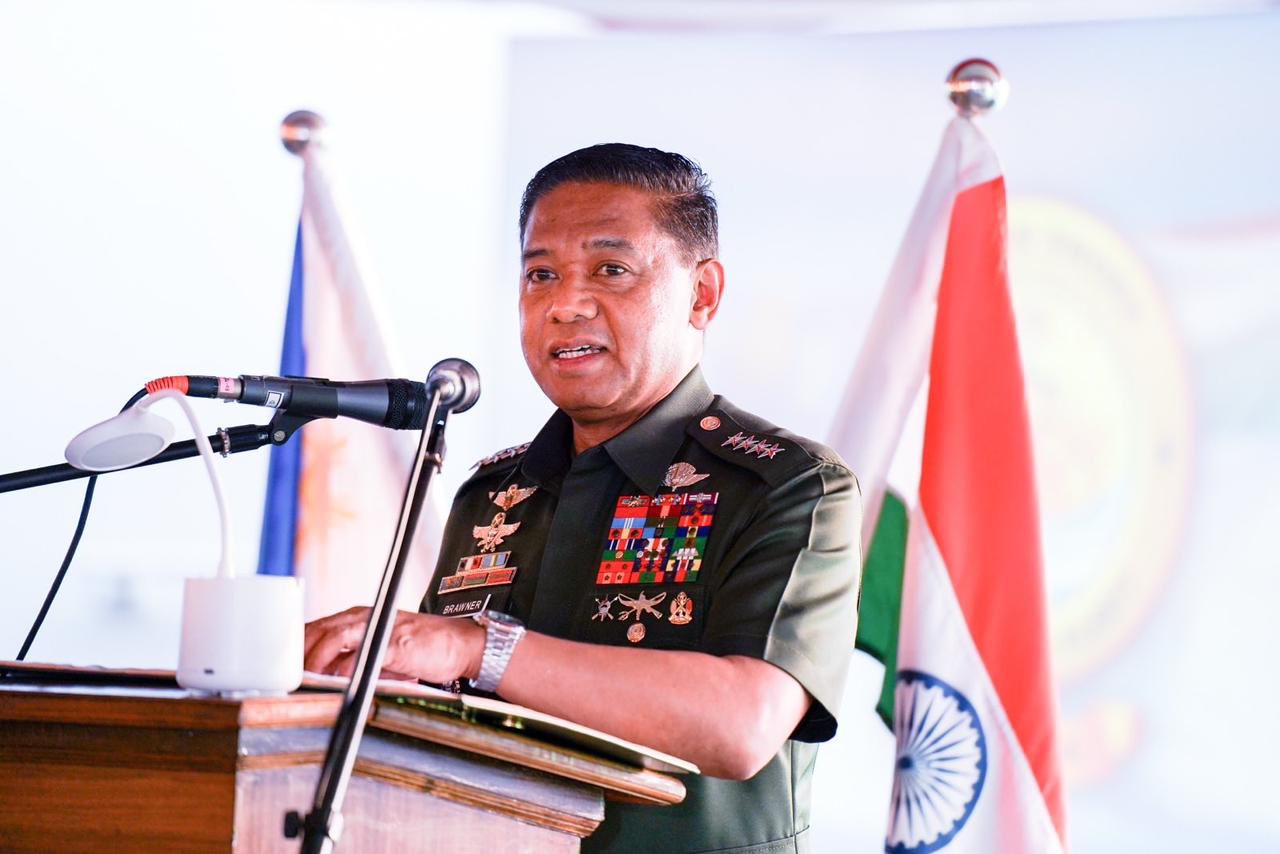
General Romeo S. Brawner Jr., PA, Chief of Staff, Armed Forces of the Philippines
Defense is built on relationships — through phone calls and meetings that grow into strategies, plans that take shape as coordinate action, and operations that secure our borders, uphold sovereignty, and preserve the fragile peace we all depend on.
Earlier this August, the Philippine and Indian navies held our first-ever bilateral Maritime Cooperative Activity (MCA) in the West Philippine Sea. This modest two-day sail was brief by military standards, yet holds great significance for our regional security and for every Filipino who relies on safe, lawful seas.
The Philippine and Indian navies conduct the two countries’ first-ever bilateral Maritime Cooperative Activity in the West Philippine Sea early this month.
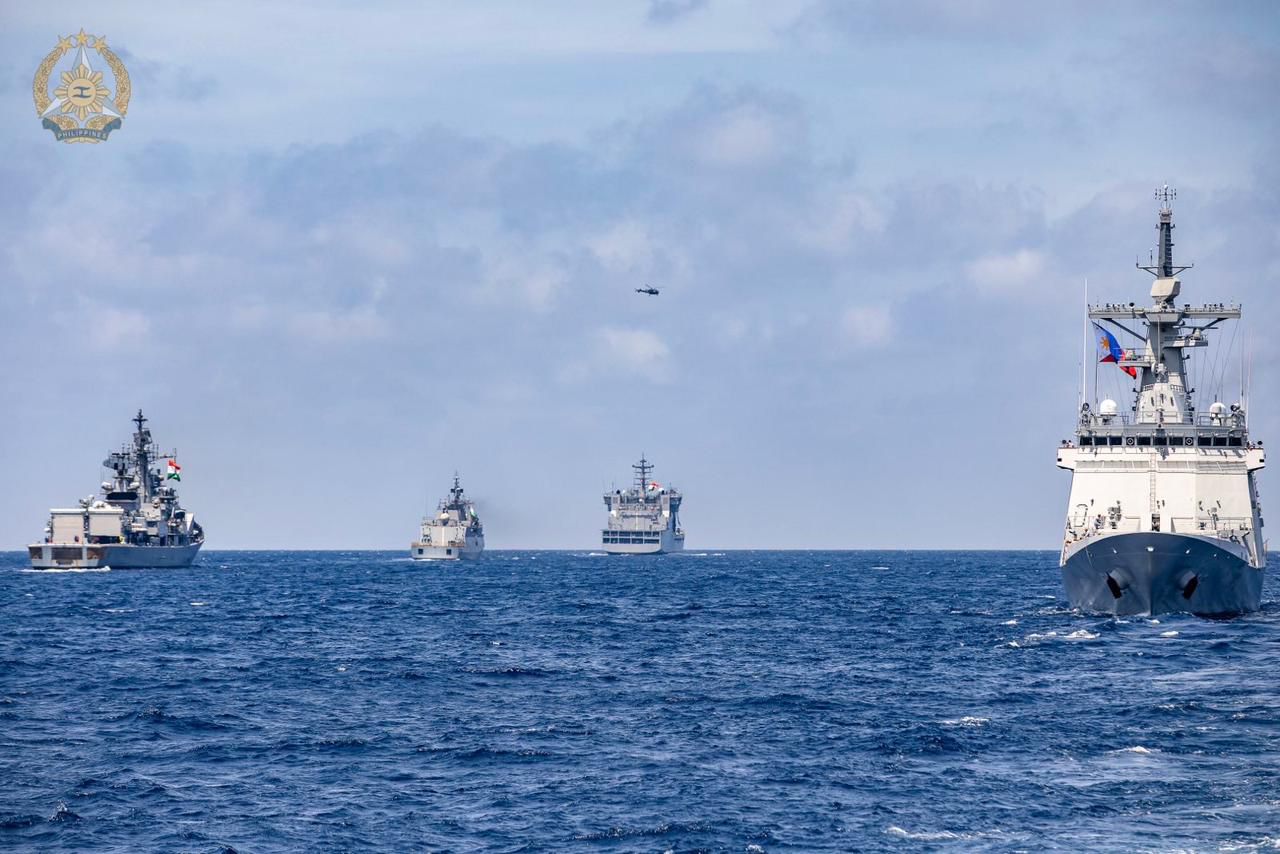
The Philippine and Indian navies conduct the two countries’ first-ever bilateral Maritime Cooperative Activity in the West Philippine Sea early this month.
This effort took root during my visit to India, where I met with my counterpart, India’s Chief of Defense Staff (CDS) General Anil Chauhan. I put forward a simple proposal to have our navies sail together in our waters professionally, transparently, and in full adherence to international law. Gen. Chauhan welcomed the idea, and we continued the dialogue in the sidelines of later engagements.
The naval exercises coincided with President Ferdinand “Bongbong” R. Marcos Jr.’s recent state visit to India, bringing political goodwill and military cooperation to meet on the same horizon.
MCAs are professional interactions at sea involving formations, communications drills, exchanges that build trust and improve how fast and how safely our forces can work together.
Members of the Philippine Navy salute their counterparts in the Indian Navy during a Maritime Cooperative Activity held in early August.

Members of the Philippine Navy salute their counterparts in the Indian Navy during a Maritime Cooperative Activity held in early August.
Since 2023, the Philippines has organized MCAs, both bilateral and multilateral, with like-minded partners including the United States, Australia, Japan, Canada, France, New Zealand, and now India. These sails are routine and lawful. They are also purposeful as they reinforce a free and open Indo-Pacific and a rules-based international order.
When multiple nations show up together calmly, predictably, and professionally, they send a quiet message that maritime law is not a suggestion; it is the standard. The MCAs are not about saber-rattling. They are about seamanship, interoperability, and collective resolve.
The law and lives at stake
The Philippines stands on firm legal ground. In 2016, an international tribunal in The Hague ruled categorically that China’s so-called “nine-dash line” has no basis in international law and that the Philippines enjoys sovereign rights in the maritime zones awarded under UNCLOS. That ruling is clear and final.
But the law only protects those who can stand behind it. Our fisherfolk need safe access to their traditional grounds. Our energy future depends, in part, on exploring resources within our Exclusive Economic Zone. Our economy relies on steady sea lanes, nearly a third of global maritime trade by value, amounting to well over three trillion dollars annually, passes through the West Philippines Sea. Stability here is not an abstraction; it is food on Filipino tables and fuel in our future.
Cooperation became momentum
The Philippines began convening MCAs in earnest in 2023, building step by step. In 2024, we sailed with multiple partners including Japan, Australia, Canada, and the U.S., in drills that emphasized communication, navigation, and coordinated presence in and around our waters. By the first half of 2025, those exercises had matured into multilateral activities and higher-end drills, including events alongside France’s carrier group and combined activities with Australia and the United States. New Zealand then signed a Visiting Forces agreement that will enable its deeper participation in our future activities. Each of these threads, woven together, forms a stronger fabric of security.
India’s participation adds another essential strand. As the world’s most populous democracy and a major Indo-Pacific naval power, India shares our interest in open seas and lawful conduct. Sailing together is not just symbolism; it is practical preparation—shared procedures, shared signals, shared habits of cooperation that make the next crisis less dangerous and the next response more effective.
These MCAs are not aimed at any one country. They are anchored on principles: freedom of navigation and overflight, peaceful resolution of disputes, and respect for international law — principles we expect of ourselves and of others. When we sail with friends, we lower the risk of miscalculation and raise the cost of coercion. We show our people — and the region — that the Philippines will never face its challenges alone.
A personal note on preparedness
As a soldier, I have seen how partnerships translate from paper to practice. Exercises become muscle memory. Muscle memory becomes speed. And speed, at sea, saves lives — whether in a maritime incident, a humanitarian crisis, or a disaster response that demands airlift and sealift in hours, not days. Our MCAs build the very habits that allow us to render assistance quickly and operate safely alongside allies who know our voice on the radio and our intent in the maneuver.
For both Manila and New Delhi, the logic is clear. We are maritime nations with long coastlines and complex security environments. We are democracies whose prosperity depends on reliable sea lanes and predictable rules. We are nations whose armed forces increasingly meet each other on global missions—from UN peacekeeping to humanitarian assistance. The more often we train together, the better we will be when it counts.
India’s engagement also dovetails with a broader Indo-Pacific reality that no single country can keep these waters stable. It takes networks — of trust, of capability, and of constant, quiet cooperation.
A message to our kababayans
First, your Armed Forces are not merely standing still. We are strengthening alliances and building new ones. We are investing in interoperability, not as a slogan, but as a lived practice at sea, land, and air.
Second, these activities are about the Filipino’s everyday life. Fisherfolk need safe waters. Merchants need steady shipping. Communities need responders who can move fast when typhoons strike. Cooperation with partners gives us more eyes, more lift, and more options. These are practical things that matter when families are waiting for help or when livelihoods are on the line.
Last but not the least, we will always proceed with discipline and restraint. Professionalism is our first language at sea. The Philippines will continue to assert its rights firmly and lawfully, and to do so in the company of nations that share our respect for the rules.
Where this goes from here
The first PH-India MCA is a beginning, not a finish line. We will keep inviting partners to train with us in and around the West Philippine Sea — transparent, announced, and entirely consistent with international law. We will raise the level of complexity where it makes sense, and keep the focus on safety, communication, and practical cooperation. And we will connect these sails to the larger work of modernizing our force — ships, aircraft, sensors, and the training that turns platforms into capability.
Some will ask does this “provoke?” The honest answer is the opposite. Comprehensive, coordinated, lawful presence is stabilizing. It reduces the risk that misread signals or unilateral actions spiral into crisis. It tells everyone, friends and competitors alike, that we are for steady seamanship and firm principles. Many nations willing to show up for them.
In the end, this is the heart of deterrence in a crowded sea: not bluster, but backbone; not isolation, but partnership; not escalation, but readiness.
When I look back at the phone calls, the meetings, the planning sessions that led to those two days at sea with our Indian counterparts, I see something simple and strong: the Philippines choosing connection over fear, and preparation over wishful thinking.
We will keep sailing with friends. We will keep standing on the law. And we will keep the West Philippine Sea peaceful, because that is what our people deserve. That is The General Idea.


